But two property owners refused to sell. Honey Meerzon owned 505 Smith Street, a four-unit apartment building housing 13 residents. Luis Romero operated Quick Tire & Auto at 157 State Street, a business he has run since 1979 employing six workers. Both properties sat on Block 89. In 2024, the Perth Amboy Planning Board, following City Council authorization, declared the parcels "blighted."
The designation required the city to prove the area exhibited "faulty arrangement or design," "lack of ventilation, light, sanitation," or "impracticality of improving" the parcels to meet code. City officials presented evidence of litter, feral cats, police calls to the area, and impervious surface coverage exceeding 75 percent. The board accepted a professional engineer's report and sworn testimony classifying the area as blighted, clearing the path for condemnation.
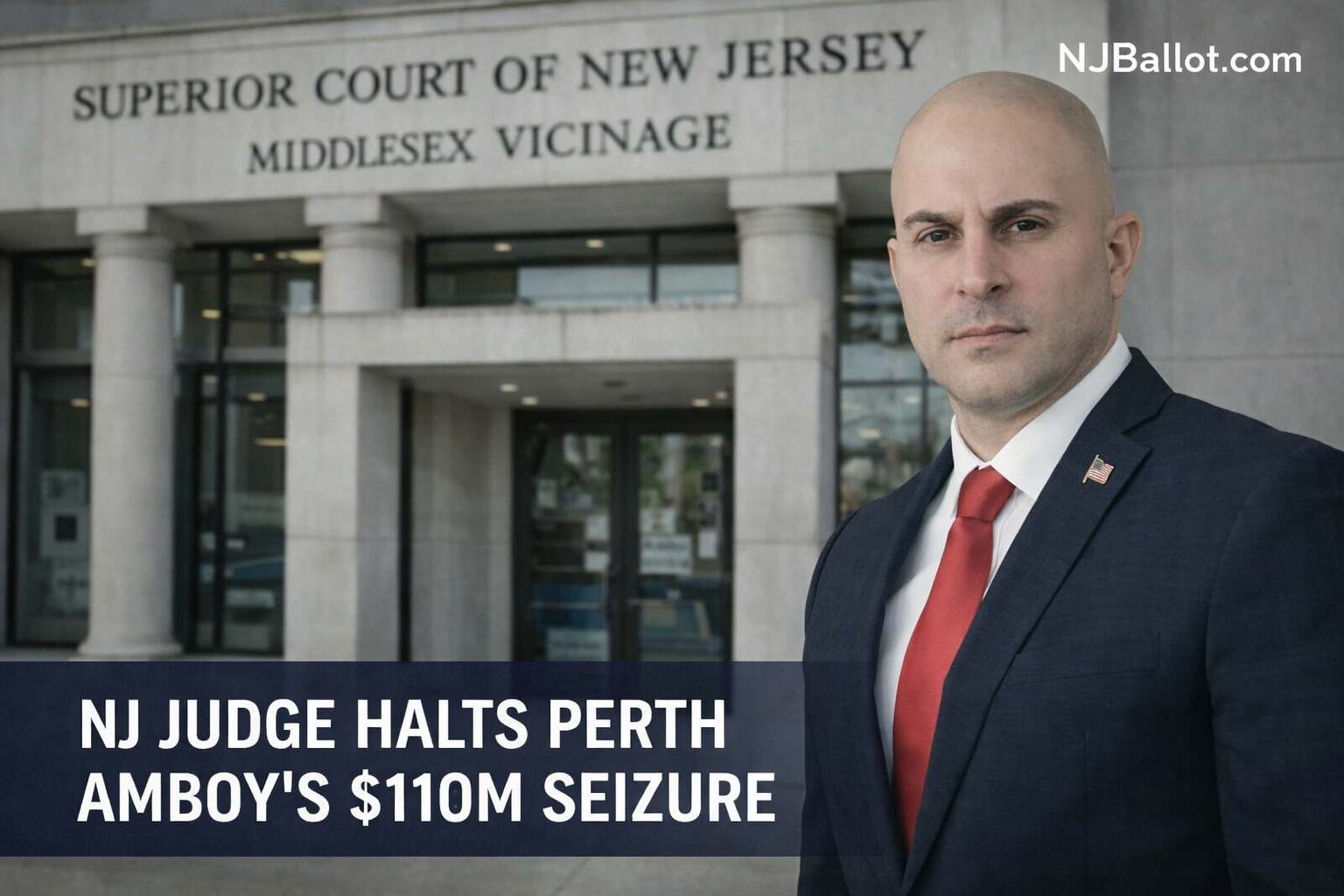
Meerzon and Romero hired the Institute for Justice, a public interest law firm specializing in property rights. In 2023 or early 2024, the property owners filed suit in Superior Court challenging the blight designation. The case landed before Judge Benjamin Bucca Jr. in Middlesex County.
On March 2, 2026, Bucca issued a 20-page opinion vacating the blight designation. The judge ruled that the city's evidence was "arbitrary, capricious, and unsupported by substantial credible evidence." Specifically, Bucca found the city failed to prove faulty arrangement of structures, lack of ventilation or sanitation, or impracticality of bringing the properties up to code. The court noted that while the area might show "signs of disrepair," the city had not met the statutory standard for blight.
The court order vacated the designation for all seven lots on Block 89, effectively halting the eminent domain seizure. The ruling preserves Meerzon's four-unit building and Romero's tire shop, which sits across from the proposed warehouse site. The Institute for Justice announced the victory in a March 3 press release, stating the city had "manufactured blight" to benefit a private developer. Bobbi Taylor, an IJ attorney, argued the city targeted functional properties owned by minorities while ignoring similar conditions elsewhere.
City spokesperson Lisett Lebron responded on March 3, stating the administration was "reviewing the opinion with counsel" and noted the Planning Board had followed "a robust public process including professional reports and sworn testimony from a licensed engineer."
On March 20, News12 New Jersey reported the city faces a 45-day window to appeal Bucca's ruling to the Appellate Division. The deadline is on or around April 16. As of March 20, the city had not indicated whether it would appeal, modify the Gateway project to exclude the contested parcels, or negotiate with the property owners.
Viridian Partners has not publicly commented on whether the ruling jeopardizes the entire Gateway project or if the warehouse can proceed on the remaining 40 acres should the city abandon the seizure.
Related: How another NJ town is fighting development pressures
Sources
• Michele L. Reinbach, “Perth Amboy Judge Vacates Blight Designation for Two Properties Slated for $110M Development,” MyCentralJersey (March 3, 2026)
• News12 New Jersey, “Perth Amboy Judge Rules City Cannot Use Eminent Domain for $110M Development,” News12 New Jersey (March 20, 2026)
• Judge Benjamin Bucca Jr., Opinion, Superior Court of New Jersey, Docket No. C-305-23 (March 2, 2026)
• Bobbi Taylor, “Victory: Court Rules Perth Amboy 'Blight' Designation Was 'Arbitrary and Capricious,'” Institute for Justice (March 3, 2026)
• Lisett Lebron, statement to MyCentralJersey (March 3, 2026)